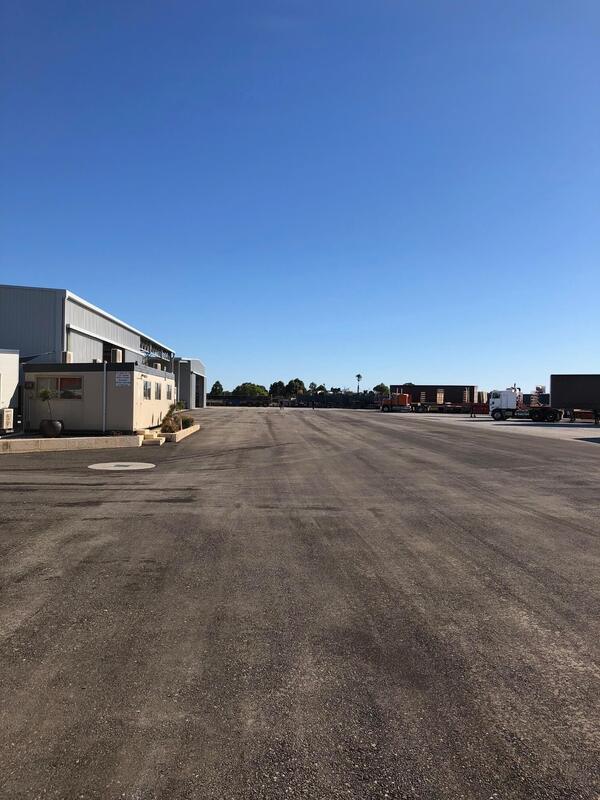
Asphalt is used across a remarkably wide range of surfacing projects, from everyday driveways to roads carrying regular traffic and hardstands supporting heavy vehicles and equipment. Although these applications place very different demands on a pavement, asphalt can be designed and constructed to suit each one.
For property owners and businesses in Boonah, QLD, the real value of asphalt lies not simply in the material itself, but in the complete pavement system. Correct site preparation, a stable base, appropriate drainage, suitable pavement thickness and professional compaction all influence how effectively the finished surface performs.
At Boonah Asphalt & Bitumen Surfacing, we understand that reliable asphalt resurfacing starts with matching the pavement to how the area will actually be used.
Asphalt Combines Strength with Flexibility
A major advantage of asphalt is its ability to provide a strong surface without being completely rigid. Vehicle traffic places repeated loads on pavement, while changes in the supporting ground and environmental conditions can introduce additional stresses.
A correctly designed asphalt pavement can accommodate a degree of movement while continuing to distribute traffic loads through the pavement layers below.
This combination of strength and flexibility makes asphalt suitable for surfaces ranging from residential driveways to considerably more demanding hardstand applications.
Why Asphalt Works Well for Roads
Road surfaces need to cope with repeated vehicle movements while providing consistent driving conditions. Irregularities, rutting and pavement deterioration can affect both the usability of a road and how quickly further damage develops.
Professionally laid asphalt creates a continuous, relatively smooth surface that supports predictable vehicle movement. When constructed over a properly prepared foundation, the pavement distributes traffic loads rather than allowing them to become concentrated in weak areas.
The result is a practical road surface that can withstand regular use while remaining suitable for ongoing maintenance and resurfacing as it ages.
Why It Is Practical for Driveways
A driveway may not experience the same traffic volume as a road, but it still faces repeated loading in particular areas. Vehicle entrances, turning points and regular parking positions can all place concentrated stress on the pavement.
Asphalt provides a stable surface for everyday vehicle movements while creating a clean, consistent finish around the property.
For driveways in Boonah, correct preparation is especially important. Simply covering an unstable or poorly drained area with asphalt does not resolve the problems underneath. The base must provide adequate support, and the driveway profile needs to direct water away effectively.
When these fundamentals are addressed, the asphalt surface can provide dependable access and resist premature deformation.
What Makes Asphalt Suitable for Hardstands?
Hardstands present a different challenge because they may be exposed to stationary loads, heavy vehicles, machinery and repeated turning movements.
An effective hardstand therefore needs more than a durable top layer. The complete pavement structure must be designed for the loads it is expected to carry.
Asphalt works effectively in hardstand construction because pavement depth, base preparation and surfacing can be adapted to the intended application. A professionally constructed hardstand can provide a firm operating area for vehicle movements, equipment positioning and other demanding uses.
The key is ensuring that the pavement is designed as a heavy-duty surface rather than treating it like an ordinary driveway.
Strong Base Preparation Makes the Difference
Regardless of whether asphalt is being used for a road, driveway or hardstand, the condition of the foundation is critical.
The base beneath the asphalt carries and distributes much of the load placed on the pavement. If it is poorly compacted, too weak or affected by moisture, movement can eventually become visible at the surface.
Problems associated with an inadequate foundation can include:
- Depressions and uneven settlement
- Rutting in frequently trafficked areas
- Cracking caused by movement below
- Potholes developing in weakened sections
- Edge deterioration
- Recurring surface repairs
Professional preparation helps create a uniform platform capable of supporting the asphalt above it.
Compaction Creates a Dense, Stable Surface
Asphalt needs to be compacted correctly while it is being laid. Compaction brings the material together to create the density and stability required for long-term performance.
Insufficient compaction can leave the pavement more vulnerable to movement and deterioration. Correct compaction, on the other hand, helps the asphalt resist traffic stress and reduces unnecessary voids within the finished layer.
The same principle applies to the underlying base. Each pavement layer needs to be properly prepared and compacted so that the entire structure works together.
Drainage Protects Every Type of Asphalt Pavement
Water management is essential whether the project involves a driveway, road or hardstand.
If water continually pools on the surface, enters cracks or reaches vulnerable base materials, pavement strength can gradually decline. Traffic passing over weakened areas can then accelerate cracking, deformation and pothole formation.
Correct grading helps create the necessary falls to direct water away from the pavement. Attention should also be given to low points, edges and surrounding ground so that runoff does not repeatedly return to the surfaced area.
Effective asphalt construction therefore considers drainage from the beginning rather than treating it as an afterthought.
A Smooth Surface Improves Everyday Usability
The consistent finish provided by asphalt is another reason it performs effectively across different applications.
For driveways, this means comfortable everyday vehicle access. On roads, a smooth profile supports more consistent driving conditions. On hardstands, an even surface makes it easier for vehicles and equipment to manoeuvre around operational areas.
Surface quality also affects drainage. Unwanted depressions can hold water, so achieving the correct levels during construction contributes to both usability and pavement protection.
Asphalt Can Be Maintained as It Ages
Even a well-constructed asphalt pavement experiences gradual wear. Traffic, sunlight, weather exposure and ageing of the binder eventually affect the surface.
One advantage of asphalt is that deterioration can often be managed progressively. Cracks and isolated defects can be addressed when they first appear, while resurfacing may restore a worn pavement where the underlying structure remains suitable.
This makes regular inspection valuable. Early maintenance can prevent water from reaching the base and stop localised defects from developing into more extensive pavement failures.
The Right Asphalt Solution Depends on the Application
There is no single pavement specification that is appropriate for every project. A driveway carrying passenger vehicles should not automatically be constructed in the same way as a hardstand exposed to substantially heavier loads.
Before work begins, factors such as intended traffic, existing ground conditions, drainage and the condition of any existing pavement should be considered.
Professional assessment allows the construction or resurfacing approach to be matched to the actual demands of the site. This is where experienced workmanship adds significant value: the objective is not simply to lay asphalt, but to create a pavement structure that is appropriate for its purpose.
Professional Construction Supports Long-Term Performance
Many asphalt problems that become visible years later can be traced back to weaknesses below the finished surface. Poor grading, inadequate compaction, unsuitable base conditions and unresolved drainage problems can all shorten pavement life.
At Boonah Asphalt & Bitumen Surfacing, our approach focuses on the condition of the entire pavement. Careful preparation and appropriate resurfacing methods help create roads, driveways and hardstands capable of delivering reliable everyday performance.
Conclusion
Asphalt is effective for roads, driveways and hardstands because it combines durability, flexibility and a smooth finished surface with the ability to be designed for very different traffic demands. However, asphalt performs at its best only when the complete pavement is constructed correctly.
Strong foundations, accurate grading, effective drainage and thorough compaction all contribute to a surface that remains stable and functional over time. The requirements of the project must also be considered so that the pavement is suitable for the vehicles and loads it will experience.
For property owners and businesses in Boonah, QLD, Boonah Asphalt & Bitumen Surfacing provides professional asphalt and bitumen resurfacing for a range of applications. If an existing road, driveway or hardstand is deteriorating, or you are considering a new surfaced area, arranging a professional assessment can help determine the most appropriate approach for dependable long-term performance.
Call us on: 07 5241 1492
Click here to find out more about Boonah Asphalt & Bitumen Surfacing
Click here to complete our contact form and see how we can help with your Asphalt and Bitumen Surfacing needs.